

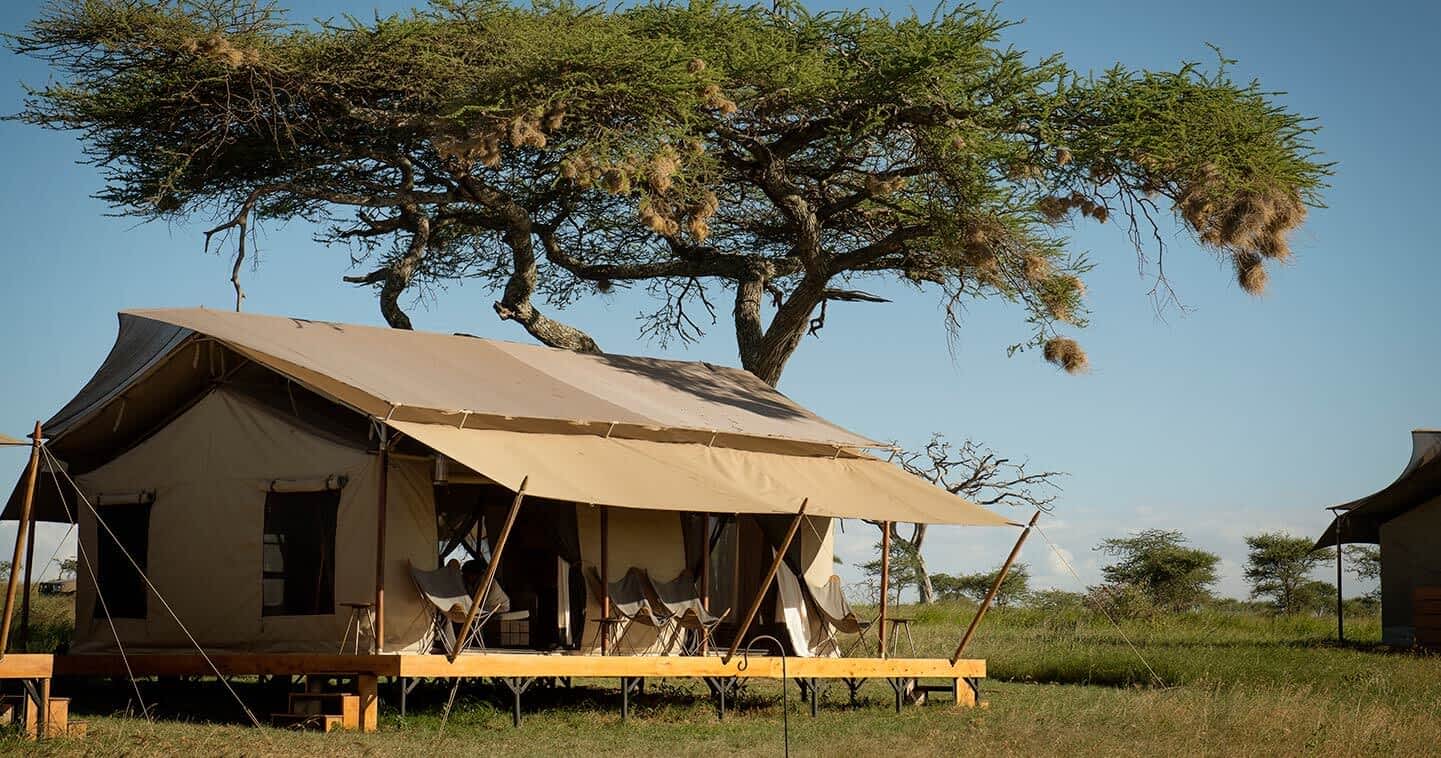
On paper, many Serengeti safari camps look similar.But once you’re actually on safari, one factor quickly separates a good experience from an unforgettable one: where your Serengeti Safari camp is located?
In the Serengeti, distance matters. A camp position determines how much time you will spend watching wildlife versus driving to find it, how early you can start, how late you can stay, and even what you hear after dark. Your Serengeti safari experience begins and ends with the camp location, whether you realize it or not.
Proximity to Wildlife Areas
The closer your camp is to active wildlife zones, the richer your days become. Camps located near rivers, migration corridors, or predator territories allow for a short, purposeful drive. Instead of spending an hour just to reach good viewing areas, you are often among wildlife within just a few minutes.
Shorter drives mean:
- More time to observe animals’ behavior, not just spotting them
- Flexibility to stop, wait, and watch
- Less fatigue over game drives
- This is especially important during peak activity windows, early morning, and late afternoon.
A strategically placed Serengeti camp lets you arrive while wildlife is already moving, not after the moment has passed.
Seasonal Camp Placement
The Serengeti isn’t static. Wildlife moves, and the best camps move or are chosen accordingly.
Seasonal and mobile Serengeti safari camps are positioned to follow migration patterns, calving grounds, or river crossings. During certain months, being even 30 to 40 kilometers off the main movement can dramatically reduce sightings.
Camps that align with seasonal wildlife movement offer:
- Front-row access to migration events
- Higher predator density during calving seasons
- Less competition from vehicles
Understanding seasonal placement is key to matching expectations with reality. The best Serengeti accommodation safari is not the most luxurious; it is the most correctly positioned.
Morning and Evening Access
Tanzania Safari magic happens at the edges of the day. Early mornings and late evenings is when predators hunt, temperatures drop, and animals move with purpose. But having access to these hours depends entirely on your camp’s location.
Camps inside or adjacent to prime wildlife areas allow:
- Immediate departure at first light
- Extended sunset game drives
- Quick returns without rushing
Camps located far from action zones often require early wake-ups just to reach good areas and early exits to comply with park regulations or long return drives.
Your ability to fully experience dawn and dusk is not about effort; it is about geography.
Night Sounds and Surroundings
Safari does not end when the vehicle stops. At night, the camp location shapes what you hear, feel, and sense. Camps set within active ecosystems come alive after dark. Hyenas whoop nearby. Lions call in the distance. Elephants move through camp corridors.
These sounds are not staged; they are proximity in action.
A well-placed Tanzania safari camp offers:
- Authentic nighttime wildlife presence
- Deeper immersion in the ecosystem
- A sense of being inside the Serengeti, not beside it
Camps farther from the wildlife zone tend to be quiet, not always by choice, but by necessity.
Matching Camps to Safari Goals
No single camp suits every traveler. Some guests want non-stop wildlife action. Others prioritize calm, photography, walking safaris, or comfort. The key is to match camp location to safari goals—not marketing promises.
Ask the right questions:
- Do you want Great wildebeest migration-focused sightings or year-round game viewing?
- Is photography a priority?
- Do you value quiet evenings or constant wildlife presence?
- How much time do you want to spend driving each day?
A thoughtfully chosen camp enhances your experience without demanding effort. The wrong location quietly limits it. This is where experienced planners and honest guidance matter most.
Time, Energy, and Experience
One of the most overlooked factors in safari planning is energy. Long daily drives not only consume time, but they also dilute focus. Short drives preserve curiosity, patience, and excitement. Over several days, this difference becomes profound.
A strong Serengeti safari experience feels unhurried. You wait and you observe behavior rather than chase sightings. Camp location makes this possible.
It also influences the cost. Camps closer to wildlife zones often justify higher rates because of the access and efficiency, hence affecting the overall Tanzania Safari Cost in meaningful ways.
Safety, Comfort, and Logistics
Well-positioned camps are also designed with safety and logistics in mind. They follow wildlife corridors responsibly, maintain clear camp boundaries, and offer trained staff who understand animal behaviors. This gives a balance between immersion and security, supporting Tanzania travel safety without breaking the safari atmosphere.
Comfort doesn’t disappear it becomes calmer, more integrated, and more intentional.
Why Location Changes Everything
Tanzania Safari memories aren’t built on checklists. They are built on moments, an unplanned leopard sighting, a lion call outside your tent, an extended observation because you did not need to rush back to camp.
All of these moments are a result of where you sleep. Choosing the right camp location not only guarantees dramatic sightings but also creates the conditions where they’re more likely, more relaxed, and more meaningful.
