


This is true regardless of whether you are an audiophile or a casual listener; selecting the appropriate headphones may dramatically improve the quality of your listening experience. Given the plethora of options, it is crucial to possess a thorough understanding of the differences between on-ear headphones and over-ear headphones. To help you make an educated decision, we will go over these differences in this post.
Over-Ear vs. On-Ear Headphones
When deciding between over-ear and on-ear headphones, it’s important to consider sound quality, comfort, portability, noise isolation, and battery life. Each kind of headphone has distinct benefits, and recognizing them will help you choose the ideal solution for your needs.
Sound Quality Comparison
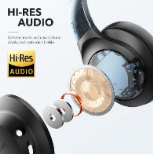
The quality of the sound produced by headphones is often the most important consideration for quite a few people. The sound quality of over-ear headphones is often superior to that of other types of headphones because of their bigger drivers and improved sound isolation, which results in a more immersive listening experience. One example is the Soundcore Life Q20 over-ear headphones, which have been awarded the Hi-Res Audio certification. These headphones are equipped with custom-made dynamic drivers that are 40 millimeters in size and generate superb sound with extended high frequencies that can reach up to 40 kilohertz. This guarantees an amazing level of clarity and detail.
Comfort and Fit
Another important factor to take into account is comfort. When it comes to lengthy listening sessions, headphones that cover the full ear and have cushioned ear cups are often more comfortable than headphones that just cover the back of the ear. This design reduces the amount of pressure that is placed on the ears. The Life Q20 headphones, for example, include earcups made of memory foam that softly mold around your ears. Additionally, the headband’s rotating joints automatically change the angle of the earcups to match the shape of your head, guaranteeing that you experience the highest possible level of comfort and that the seal is completely secure. Particularly if the clamping force is very severe, on-ear headphones, which are headphones that sit directly on the ears, may become painful after being used for extended periods of time.
Portability and Storage
For those who are always on the go, portability is an essential component. When opposed to headphones that cover the ears, on-ear headphones are often more portable and less cumbersome to take along. Because they are less cumbersome and can often be folded up, they are an excellent option for those who are traveling. While over-ear headphones may be bulkier, they usually come with convenient carrying cases. On the other hand, the design of the Life Q20 strikes a convenient mix between mobility and comfort, making it a flexible option.
Noise Isolation Levels
When headphones are used in loud situations, noise isolation is a very important feature. Generally speaking, over-ear headphones are superior in this regard because they have bigger ear cups that cover the full ear, which allows them to more effectively filter out sounds from the outside world. The hybrid active noise cancellation technology offered by the Life Q20, for instance, is capable of reducing ambient sounds by as much as 90 percent. This technology is comprised of four built-in ANC microphones and a digital noise cancellation algorithm. These characteristics make them ideal for usage in a variety of loud situations, such as in airplane cabins and automobiles.
Battery Life and Features
This is particularly true for wireless devices, where battery life and extra functionality are key considerations. On-ear headphones often have smaller batteries, whereas over-ear headphones typically have bigger batteries, which allows for longer playing times. In the wireless active noise cancellation mode, the Life Q20 headphones provide a runtime of up to forty hours without interruption, while in the normal music mode, they offer up to sixty hours of such duration. In addition, they are equipped with BassUp technology, which performs real-time analysis of low frequencies in order to rapidly boost the bass output. This provides an intensified listening experience for genres that are heavy on bass.
Conclusion
Finally, there are benefits to both on-ear and over-ear headphones; choosing one over the other should be based on your needs and preferences. Those who want comfort and high-quality sound should choose over ear headphones like the Life Q20, while those who prioritize mobility and ease of use should get on-ear headphones. Understanding these distinctions might help you choose the best mix to improve your listening experience. Find the perfect pair of over-ear headphones by perusing Soundcore’s selection.
