

Every so often, a familiar headline pops up in the financial world. A well-known company announces a stock split, and suddenly investors start asking questions. Is this good news? Does it mean the stock will go up? Should I buy before it happens?
Stock splits are often misunderstood. They sound dramatic, but the mechanics are fairly simple. What makes them interesting is not the math, but the psychology, history, and signals they can send about a company’s trajectory. To really understand why stock splits matter, it helps to look beyond the headlines and into how they work, why companies use them, and what they actually mean for investors.
What a Stock Split Really Is
The Basic Idea Explained Simply
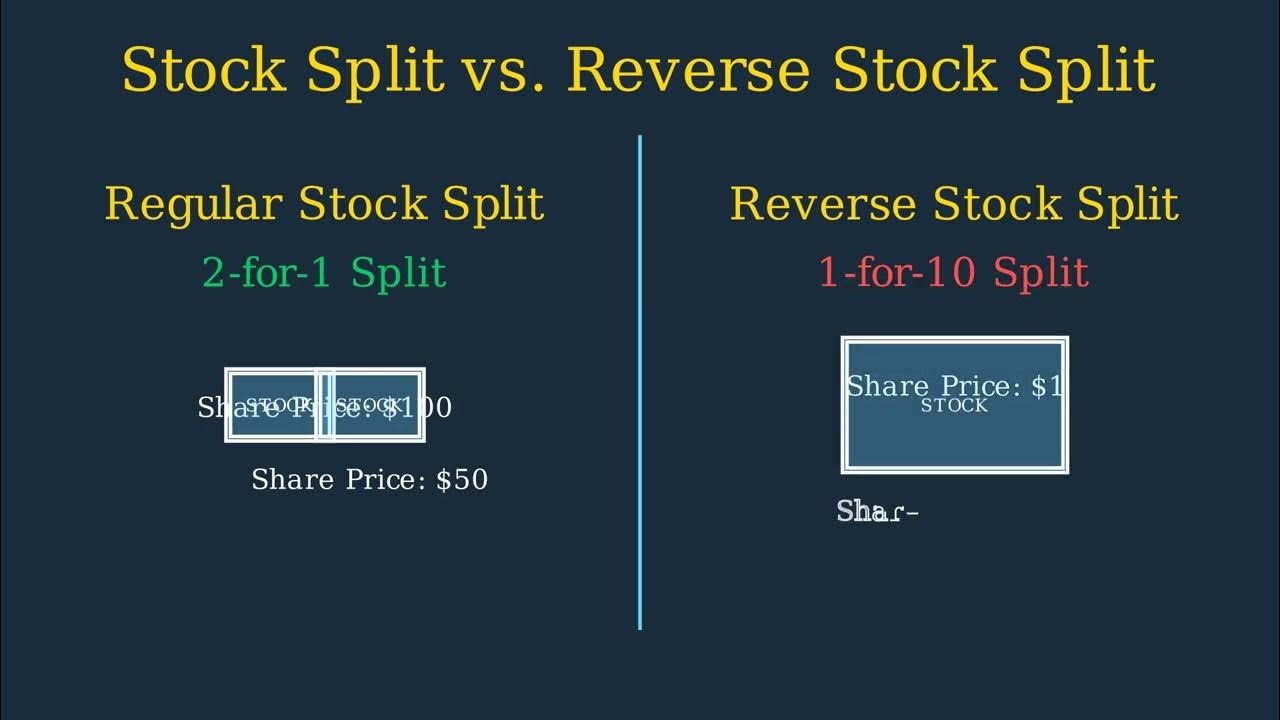
A stock split increases the number of shares outstanding while proportionally reducing the price per share. In a two-for-one split, an investor who owns one share priced at 200 dollars now owns two shares priced at 100 dollars each.
The total value of the investment does not change at the moment of the split. The pie is the same size, it is just cut into more slices.
Common Types of Stock Splits
The most common splits are two-for-one, three-for-one, and three-for-two. Less commonly, companies may execute larger splits such as ten-for-one when share prices climb very high.
There are also reverse stock splits, where shares are consolidated rather than divided. These serve a different purpose and are usually associated with struggling companies.
Why Companies Decide to Split Their Stock
Keeping Share Prices Accessible
One of the main reasons companies split their stock is to keep the share price within a range that feels accessible to a broader group of investors. Even though fractional shares exist today, many investors still think in terms of whole shares.
A lower share price can feel more approachable, especially to newer or retail investors.
Signaling Confidence Without Saying It Directly
Stock splits often occur after a period of strong performance. While a split does not change fundamentals, it can act as an indirect signal that management believes the company’s growth trajectory is sustainable.
Companies rarely split their stock when they expect trouble ahead.
Improving Liquidity
More shares at a lower price can increase trading activity. Higher liquidity makes it easier for investors to buy and sell without large price swings.
For widely held stocks, this can contribute to smoother market behavior.
How Investors Tend to React to Stock Splits
The Psychological Effect
Even experienced investors are not immune to psychology. A stock trading at 100 dollars can feel cheaper than one trading at 400 dollars, even if the underlying value is the same.
This perception can drive increased interest and demand around a split.
Short-Term Price Movements
Historically, many stocks experience a modest price bump around the announcement or execution of a split. This is not guaranteed, but it is common enough to attract attention.
These movements are driven more by sentiment than by changes in earnings or cash flow.
Long-Term Performance Depends on Fundamentals
Over the long run, stock splits do not create value on their own. Companies that perform well after a split do so because of strong business fundamentals, not because of the split itself.
The split is often a milestone along a larger growth story.
A Brief Look at History
Famous Stock Splits That Investors Remember
Some of the most successful companies in history have split their stock multiple times during periods of expansion. These splits often coincided with growing revenues, expanding markets, and strong brand recognition.
Over time, repeated splits became symbols of long-term growth rather than short-term tactics.
How Market Structure Has Changed
Decades ago, high share prices posed a real barrier to entry. Investors had to buy full shares through brokers who charged significant commissions.
Today’s markets offer low-cost trading and fractional shares, which reduces the practical need for splits. Yet companies still use them, which highlights the importance of perception and tradition.
Reverse Stock Splits and Why They Are Different
What a Reverse Split Does
A reverse stock split reduces the number of shares outstanding while increasing the price per share. For example, a one-for-ten reverse split turns ten shares at 2 dollars into one share at 20 dollars.
Again, the total value remains the same at the moment of the split.
Why Companies Use Reverse Splits
Reverse splits are often used to meet minimum price requirements for stock exchanges or to improve the appearance of a very low-priced stock.
Unlike regular splits, they are not usually seen as a sign of strength.
How Investors View Them
Reverse splits often raise caution flags. They may indicate deeper issues such as declining revenues or poor market confidence.
Context matters, but skepticism is common.
Do Stock Splits Change Anything for Shareholders
Ownership Percentage Stays the Same
After a split, each shareholder owns more shares, but their percentage ownership of the company does not change. Voting rights and dividend proportions remain consistent.
Nothing is diluted in economic terms.
Dividends Adjust Automatically
If a company pays dividends, the dividend per share is adjusted proportionally. The total dividend income for an investor remains the same unless the company changes its payout policy.
This is a mechanical adjustment, not a strategic one.
Tax Implications Are Usually Neutral
In most cases, stock splits are not taxable events. The cost basis is simply adjusted across the new number of shares.
Taxes typically come into play only when shares are sold.
How Investors Evaluate Stock Splits in Practice
Looking at the Business First
Savvy investors start with fundamentals. Revenue growth, profit margins, balance sheet strength, and competitive position matter far more than the split itself.
A split without strong fundamentals is just a cosmetic change.
Understanding the Timing
The timing of a split can offer clues. Is it happening after sustained growth, or after a sharp run-up driven by hype.
Context helps separate signal from noise.
Avoiding Overreaction
Chasing a stock solely because of a split announcement can lead to disappointment. While enthusiasm may drive short-term gains, long-term returns depend on business performance.
Patience and discipline remain essential.
Media Attention and Modern Markets
Why Split Announcements Still Make Headlines
Even in an age of sophisticated investors, stock splits remain newsworthy. They are easy to understand, visually striking, and tied to recognizable companies.
They also offer a narrative moment in a company’s story.
Social Media and Retail Investor Interest
Online communities and social platforms amplify discussion around splits. Investors share opinions, predictions, and excitement in real time.
This can increase volatility, especially around high-profile announcements.
Searching for Signals
It is common for investors to search for phrases like upcoming stock splits when trying to spot potential opportunities. While such lists can be interesting, they should be treated as starting points, not investment strategies.
Common Misconceptions About Stock Splits
A Split Means the Stock Is Cheaper
In reality, a lower price per share does not mean better value. Valuation depends on earnings, growth, and risk, not on the number printed on the ticker.
Price and value are not the same thing.
Splits Guarantee Gains
There is no guarantee. Some stocks rise after a split, others stall or decline. Outcomes vary widely.
History offers patterns, not promises.
Only Successful Companies Split
While most splits occur during strong periods, not every split leads to long-term success. Markets can change, and momentum can fade.
Splits reflect the past more than the future.
Stock Splits as Part of a Bigger Picture
Stock splits sit at the intersection of finance and psychology. They do not change cash flows, competitive advantages, or innovation pipelines. What they do change is how a stock is perceived and accessed.
For companies, a split can be a way to mark progress and invite broader participation. For investors, it can be a reminder to look deeper than surface-level changes.
Understanding stock splits helps demystify market behavior. It encourages investors to focus on substance while remaining aware of sentiment. In a market full of noise, that balance is valuable.
