

When concrete starts to fail, many property owners ask a simple question: fix what you have or tear it out and pour new? The right choice depends on several things: how bad the damage is, how long you want it to last, your budget, and the impact on the environment. In the past, damaged concrete often meant a full tear-out.
Today’s modern construction services offer many proven, affordable repair options that can keep your current slab in use.
This guide explains both paths, what they involve, when each fits best, and the main pros and cons. By the end, you’ll have a clear picture of which option suits your concrete problem.
What Is the Difference Between Concrete Restoration and Replacement?
These two approaches fix concrete in different ways. Restoration fixes and refreshes what’s there. Replacement removes the old slab and installs new concrete. Knowing the difference helps you pick the right plan for your property. In cases where replacement offers better long-term value and visual impact, upgrading to modern solutions like Pattern Imprinted Concrete Driveways can provide enhanced durability and a customised finish that traditional concrete restoration may not achieve.
What Does Concrete Restoration Involve?
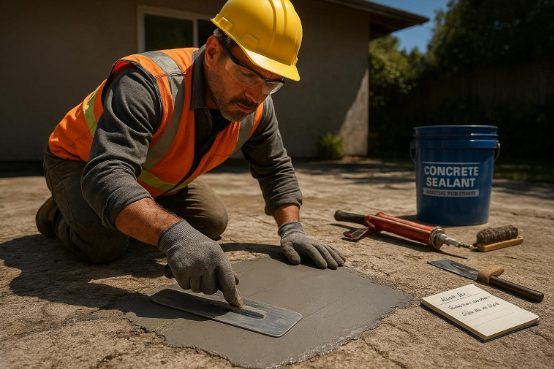
Concrete restoration repairs and refreshes existing slabs without removing them. It targets surface wear, small defects, and looks, helping the concrete last longer and look better. It’s a good fit when the base concrete is still strong and the damage is light to moderate.
Common methods include crack repair, sealing, patching, resurfacing, and overlays. Epoxy or polyurethane can fill and bond cracks. Patching and resurfacing smooth out rough spots, pits, and scaling. If rebar has corroded in certain areas, those sections can be repaired or replaced. Crews may add waterproofing membranes or sealers to resist future damage.
For added strength in some cases, carbon fiber or FRP strips can help support weak areas. The goal is to improve both look and performance without the mess and cost of a full tear-out.
What Does Concrete Replacement Involve?
Concrete replacement means starting over. Crews demolish and remove the old slab, then pour new concrete. This approach fits jobs where the slab is badly damaged, unsafe, or past the point where repairs would last. It’s also chosen when repeated fixes would cost more than starting fresh.
The process takes more steps. It starts with a detailed check for deep cracks, drainage problems, or widespread spalling. Next comes site prep: clearing the area, setting safety barriers, and checking utilities.
The old slab is broken up and hauled away. The sub-base is then prepared with compaction and gravel to create a strong base. Forms are set, new concrete is poured and finished, and then it cures for several days to gain strength.
How Do Restoration and Replacement Compare?
Restoration works with the slab you have and focuses on repair and improvement. It’s usually faster, cheaper, and less messy, and it keeps the original structure. It’s best for light to moderate issues like small cracks, stains, or minor chipping when the slab is still sound.
Replacement takes more time and labor but gives a brand-new surface. It can fix deeper problems, update old designs, and meet current codes. It’s the right choice for serious structural damage, heavy rebar corrosion, major movement, or concrete that has worn out beyond reasonable repair.
Some projects use both: replace the worst sections and restore the rest. This can balance cost, time, and performance.
For expert evaluation and solutions that combine restoration efficiency with long-term durability, turn to Nova Construction Services — specialists in structural repair and exterior restoration who tailor their approach to the condition and goals of every project.
Types of Concrete Damage: Which Approach Is Suitable?
Before choosing, you need to know what kind of damage you have and how deep it goes. Small cosmetic flaws and serious structural issues call for very different solutions.
Common Signs Your Concrete Needs Restoration
Many problems are minor and can be fixed with restoration. Small cracks, light chipping, and flaking that do not affect the slab’s strength are common and often come from normal wear, small impacts, or freeze-thaw cycles. Hairline cracks can be sealed with flexible caulk to stop them from spreading.
Discoloration and stains are also good candidates. Sun fade, oil, and chemical marks can be covered with a resurfacing layer, giving a clean, even look. Surface scaling and pitting can often be repaired if they don’t go deep.
If the slab is stable and you want a better look or smoother finish, resurfacing is a cost-friendly option. Slightly uneven slabs can sometimes be lifted with PolyLevel foam injection before resurfacing to create a level base.
When Is Replacement the Only Option?
Sometimes replacement isn’t just better-it’s necessary. Deep, wide cracks often point to foundation movement, soil problems, or heavy loads. These are signs that surface repairs won’t last. If the slab is cracked through or broken apart, you need new concrete.
Severe sinking or major uneven areas often require a new pour, especially if the base has failed. Foam lifting helps some slabs, but if the soil is unstable or the concrete is crumbling, new concrete is safer. Extensive spalling, deep pitting, or weak surfaces that won’t hold a bond are also signs to replace.
Exposed rebar is a clear red flag: the slab has worn down too far, and a new, properly reinforced slab is the right move. Very old concrete, repeated failed repairs, and slabs that no longer meet code or performance needs also point to replacement.
 How Does the Location Affect Your Choice?
Where the slab sits matters. Outside slabs like driveways, patios, and walks face weather, freeze-thaw cycles, and moisture changes. Rough, spalled, or uneven exterior surfaces caused by deicing salts or poor installation are hard to fix in a way that lasts.
Overlays may chip in harsh conditions. If you want a smooth, durable finish outside for many years, replacement may be the better pick. For light cosmetic issues on a solid base, resurfacing can still improve curb appeal and add protection.
Inside slabs, like garage or basement floors, see fewer temperature and moisture swings. Resurfacing and overlays tend to hold up better. Dips, texture, or pits can be fixed with self-leveling compounds or by grinding and polishing. If you plan to install tile or hardwood, a flat, level slab is key.
If the slab is too uneven or damaged to fix well, replacement may be needed to get a true level surface. The use case-weather exposure, traffic, or climate control-affects how long repairs last and should guide your choice.
Key Benefits and Drawbacks of Restoration and Replacement
Both options have upsides and downsides. Knowing them helps you match the solution to your budget, timeline, and goals.
Restoration: Advantages and Potential Downsides
Restoration is often the budget-friendly choice. It can cost 30-70% less than replacement because it uses less labor and fewer materials. It’s faster too-many jobs finish in 1-2 days instead of 3-5 or more for replacement-so you deal with less disruption.
It’s also greener. Keeping the existing slab cuts waste and reduces CO₂ because you avoid making new cement. A good restoration can add 10-15 years to the life of a sound slab, improve looks, and head off small problems before they grow.
Limits do exist. Deep structural cracks, major sinking, and widespread damage won’t be fixed by a surface repair. Trying to restore a badly damaged slab can lead to repeat failures and higher costs later. Resurfacing adds protection but doesn’t strengthen the slab itself. Old flaws may still show, and harsh outdoor conditions can shorten the life of surface treatments.
Replacement: Pros and Cons
Replacement costs more and takes longer, but it gives you a clean start with new concrete. You get a smooth, even surface with modern materials and code updates. For badly damaged slabs, it’s a long-lasting fix, often 30 years or more.
It also lets you correct design and base problems, like poor subgrade support or severe rebar corrosion. If safety or structure is in doubt, new concrete is the right call for a stable result.
On the downside, replacement is expensive because of demolition, removal, materials, and equipment. Work often takes 3-5 days, and new concrete needs 5-8 more days to cure before heavy use. It creates more waste and CO₂ from new cement. If soil issues aren’t fixed during the work, the new slab can still settle later.
Comparison Table: Restoration vs. Replacement
Here’s a quick side-by-side look:
| Feature | Concrete Restoration | Concrete Replacement |
| Damage Suitability | Light to moderate surface issues (small cracks, stains, pitting, flaking) | Major structural issues (deep cracks, major settling, exposed rebar, heavy spalling) |
| Cost | About 30-70% less than replacement | Much higher due to demolition, materials, and equipment |
| Project Duration | Often 1-2 days | About 3-5 days for work, plus 5-8 days to cure |
| Disruption | Low; quick turnaround | High; longer downtime |
| Lifespan | 10-15 years (with maintenance) | 30+ years |
| Structural Reinforcement | Adds a protective layer; does not strengthen slab | New slab with rebar or mesh for strength |
| Environmental Impact | Lower waste and CO₂ (reuses existing slab) | Higher waste and CO₂ (new concrete production) |
| Aesthetic Improvement | Refreshes look and covers flaws | Brand-new, uniform surface |
| Fixing Underlying Issues | Can lift minor settling with foam; won’t fix major base problems | Chance to correct design and base problems |
Comparing Costs: Concrete Restoration vs. Replacement
Budget matters for homes and businesses. Costs can vary a lot between these two options, so it helps to know what drives the price.
Factors That Affect the Cost of Restoration
Restoration usually costs less, but the price depends on the kind of damage and how much of it you have. Small cracks, light spalling, and simple stains cost less than large areas or work that needs added strength like carbon fiber reinforcement.
Materials matter too: premium overlays, sealers, and crack fillers cost more but tend to last longer. For example, UV-stable, flexible caulk rated for decades or hydrophobic foam for lifting costs more at first but can cut future repairs.
Prep work can add time and cost: cleaning, pressure washing, etching, and leveling (such as PolyLevel foam lifting) may be needed before resurfacing. Decorative finishes like stamping and staining add to the price per square foot. Resurfacing often runs $3-$7 per square foot. A two-car driveway might cost $1,200-$2,900-well below most replacements.
Factors That Influence Replacement Costs
Replacement is a larger investment. Demolition, hauling, base prep, and pouring require more labor and materials. Size and access affect price; a wide, open driveway costs differently than a tight, hard-to-reach patio. The concrete mix and reinforcement (rebar or mesh) also change material costs.
Base prep can be a big factor, especially with weak or shifting soil needing grading, compaction, or deeper base work. Heavy machinery for demo and hauling adds costs, as do disposal fees for old concrete.
Replacement can range from $4-$16 per square foot, and a standard two-car driveway can easily pass $5,000. While higher up front, it gives you a new slab that fixes root problems and reduces repeat repairs.
Long-Term Value: Initial Costs vs. Future Savings
Look beyond the first bill. Restoration often wins on upfront cost, but if the slab has serious issues, those savings may be short-lived. A cheap fix on a failing slab can lead to early failure and more spending later.
New concrete costs more at the start, but it can last 30+ years and cut down on future repairs. It also lets crews fix soil and drainage problems that caused damage in the first place. For heavy-use areas or key structural spots, the longer life and safety of a new slab can make the higher cost worth it.
Time, Disruption, and Longevity: What Should You Expect?
Beyond price, think about how long the work takes, how much it will interrupt daily life, and how long the result will last.
Project Duration: Restoration or Replacement?
Restoration is faster. Many resurfacing jobs finish in 1-2 days, including prep and application. Most surfaces are ready for light use after 24-48 hours of curing. If you need a quick turnaround, restoration is a good fit.
Replacement takes longer. Demolition, removal, base prep, and pouring usually take 3-5 days. New concrete then needs 5-8 days before heavy use. Plan on a week or more before full access returns.
Impact on Your Property During the Process
Restoration is less intrusive. There’s no heavy demo, less dust and noise, and less effect on landscaping. Work areas are smaller, and you can often still reach other parts of your property.
Replacement is more disruptive. Tearing out old concrete is noisy and dusty, with heavy equipment, debris, and blocked access for several days. Base work can affect nearby soil, plants, or utilities. Expect a larger work zone and more downtime.
Expected Lifespan After Each Option
A well-done restoration can add 10-15 years to a sound slab. Resealing every 5-10 years can help it last longer. Keep in mind it doesn’t change the core strength of the original slab.
A new slab with proper base prep and reinforcement can last 30 years or more. It offers the longest service life, especially for heavy loads or harsh conditions. Even new concrete benefits from good care and protective treatments to help it last.
Environmental Impact: Which Solution Is More Sustainable?
Many owners want to cut waste and carbon output. Each option has a different footprint.
How Restoration Reduces Environmental Footprint
Restoration reuses the existing slab, which cuts waste and landfill use. You avoid breaking up and hauling tons of concrete.
It also lowers CO₂ emissions by reducing the need for new cement, which is energy intensive to make. Applying a thin overlay instead of pouring a full new slab means fewer raw materials and less transport fuel.
Replacement and Resource Consumption
Replacement creates more waste from demo and hauling. While some concrete can be recycled, much still goes to landfills. The process uses fuel and energy at every step.
Making new concrete requires cement, sand, and gravel. Cement production releases large amounts of CO₂, and mining and hauling aggregates consume resources and can disturb habitats. Heavy equipment on site also burns fuel. When safety demands it, replacement is the right call, but it has a larger environmental cost than restoration.
 Should You DIY or Hire a Professional for Concrete Work?
 Should You DIY or Hire a Professional for Concrete Work?
Doing it yourself can look cheaper, but concrete work is tricky. Mistakes often lead to more repairs later, especially with anything beyond light surface issues.
Risks and Rewards of Do-It-Yourself Restoration
DIY can save labor costs on small problems like hairline cracks or minor stains. You can work on your own schedule, and many stores sell user-friendly kits.
But the risks are real. Good results require solid prep, the right tools, and proper technique. Poor cleaning, etching, or leveling can cause overlays to peel or chip. Bad patching can break loose. These errors wipe out savings and can make later repairs harder.
There are safety risks too when handling materials and tools. Handy owners can tackle small cosmetic fixes, but deeper issues are better left to pros.
When to Call a Concrete Contractor
Most repair and replacement jobs need a professional. Contractors can find the true cause of damage and tell the difference between cosmetic wear and structural problems. This early check helps pick the right approach.
Pros use quality materials and follow best practices for prep, mixing, application, and curing. Deep cracks, major settling, and exposed rebar often call for methods like polyurethane foam lifting or structural rebuilds. Licensed and insured contractors usually provide warranties, adding protection for your investment. While you pay more upfront, you get durable results and fewer headaches later.
How to Decide: Is Restoration or Replacement Right for You?
This choice affects safety, looks, and value for years. Every property is different, so weigh your situation carefully.
Questions to Ask Before Making Your Choice
Use these questions to guide your decision and talk with contractors:
- How serious is the damage? Is it surface wear (small cracks, stains, shallow pits) or structural (wide cracks, sinking, exposed rebar)?
- What is your budget, and how long do you want the fix to last (10-15 years vs. 30+ years)?
- How much downtime can you handle? Do you need a quick turnaround or can you wait for a full replacement and cure time?
- How will the slab be used? Light foot traffic, vehicles, or heavy equipment?
- Do environmental concerns matter to you? If so, repair may be the greener choice.
A skilled contractor’s review helps confirm whether repair will last or if a new slab is the smarter long-term plan.
Case Studies: Successful Outcomes for Each Method
Scenario 1: A homeowner’s patio has hairline cracks, sun fading, and small chips. The slab is stable with no sinking. A pro cleans the surface, fills cracks with flexible caulk, and applies a quality overlay. The patio looks new, gains protection, and should last another decade or more-at a fraction of the cost and time of replacement.
Scenario 2: A commercial loading dock shows deep cracks, major uneven areas from base settlement, and corroded rebar. The slab is crumbling and unsafe. Patching won’t hold. The contractor removes the slab, repairs the base with compaction, installs new reinforcement, and pours a new, strong slab. While cost and downtime are higher, the dock is safe, durable, and ready for heavy use for many years.
Frequently Asked Questions: Concrete Restoration vs. Replacement
Here are answers to common questions from property owners.
Is Resurfacing the Same as Restoration?
Resurfacing is one kind of restoration. Restoration includes many repair methods such as crack injection, spall fixes, rebar treatment, and waterproofing. Resurfacing puts a thin, bonded layer over the old surface to improve looks and function. So, all resurfacing is restoration, but not all restoration is resurfacing.
Can All Cracks Be Fixed Without Replacement?
No. Hairline or small surface cracks can often be sealed or covered during resurfacing. Deep cracks that go through the slab or come from movement and base failure need more than a surface fix. In those cases, a new slab is the reliable option. A pro can tell which type you have.
How Long Should I Wait Before Using My Restored or New Concrete?
For restoration and resurfacing, most products allow light foot traffic after about 24-48 hours. Follow the product or contractor’s guidance.
For new concrete, it may look hard early on, but it needs 5-8 days before heavy loads or vehicles. Driving on it too soon can cause cracks or uneven spots.
Choosing the Best Solution for Your Concrete Needs
Concrete repair and replacement can feel overwhelming, but with clear information and help from a pro, the choice gets easier. Fixing your concrete-by repair or by starting fresh-protects safety, boosts curb appeal, and supports long-term value.
Act early. Small cracks grow, stains spread, and corrosion can widen quickly. Regular checks and timely fixes stop moisture from getting in, reduce freeze-thaw damage, and lower safety risks. A clean, well-kept property looks better and lasts longer.
The best option is the one that solves root problems, fits your budget, keeps downtime reasonable, and lasts as long as you need. Get expert reviews from trusted contractors. They can spot trouble areas and propose plans that balance life span, strength, and cost. With an experienced team, your concrete will be repaired or replaced with care, protecting your property for years to come.
